Why Business Owners Must Not Ignore Professional WordPress Expertise
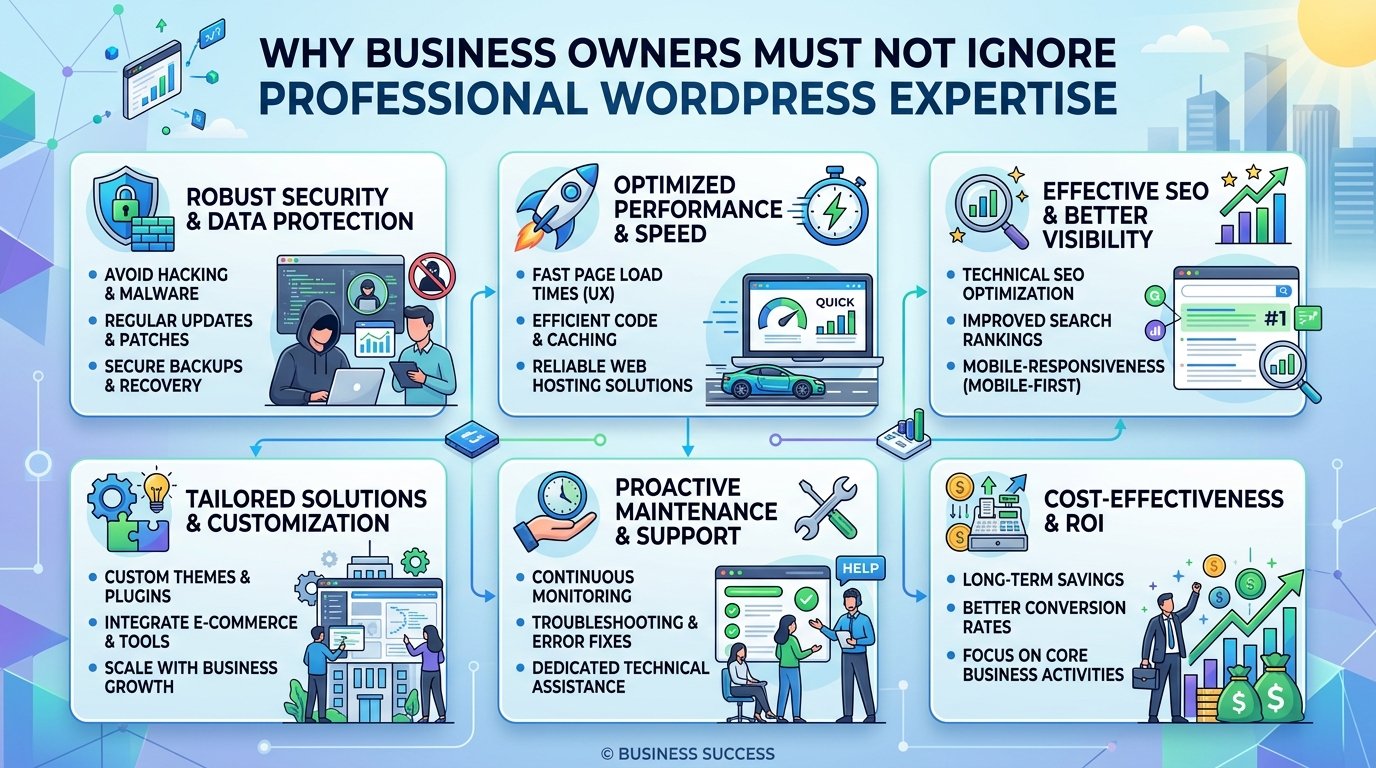
A lot of business people believe WordPress to be so user-friendly that they do not see the need to get a specialist. However, the platform powers more than 43% of all websites worldwide it must be easy, right?
Actually, the transformation of this blogging tool launched in 2003 has changed it into one of the most robust content management systems in the world, with the capacity to handle everything from the smallest service business websites to large online shopping platforms that deal with millions of transactions each day. This change has also brought about a certain level of complexity. Nowadays, the gap between a website created by a person who simply “knows WordPress” and a website created by someone who is an expert in WordPress is totally different – more like a simple online brochure vs a business generating online asset.
Measures of performance, security frameworks, adherence to accessibility norms, scoring of Core Web Vitals – all these things are not merely enhancements for which one may choose, but rather the minimum requirements for being able to compete in the online world of any industry and any market.
This article is for business owners and decision-makers who want to understand what professional WordPress website development services actually involve — and why investing in the right expertise has compounding returns over time.
Quick Insights
- Performance influences revenue directly: Studies have shown that a 1-second delay in page load time can lead to a drop in conversions by as much as 7% (Akamai).
- Security cannot be compromised: Sucuri’s annual threat report states that more than 90,000 WordPress sites get attacked every minute.
- SEO is fundamentally a technical game: Without great SEO tech, your chances of ranking will suffer even before you write your first blog post.
- Scalability shows up in a company’s ability, or desire, to change: Businesses that do not build their websites with the intention of changing the underlying structure will find themselves with a site that must be completely rebuilt within 18-24 months.
- Accessibility is no longer just a good practice but a legal requirement in several countries.
- Hiring the right WordPress web developer from the get-go is generally a lot cheaper than having to fix a poorly built site down the road.
What’s Changed in WordPress Development And Why It Matters
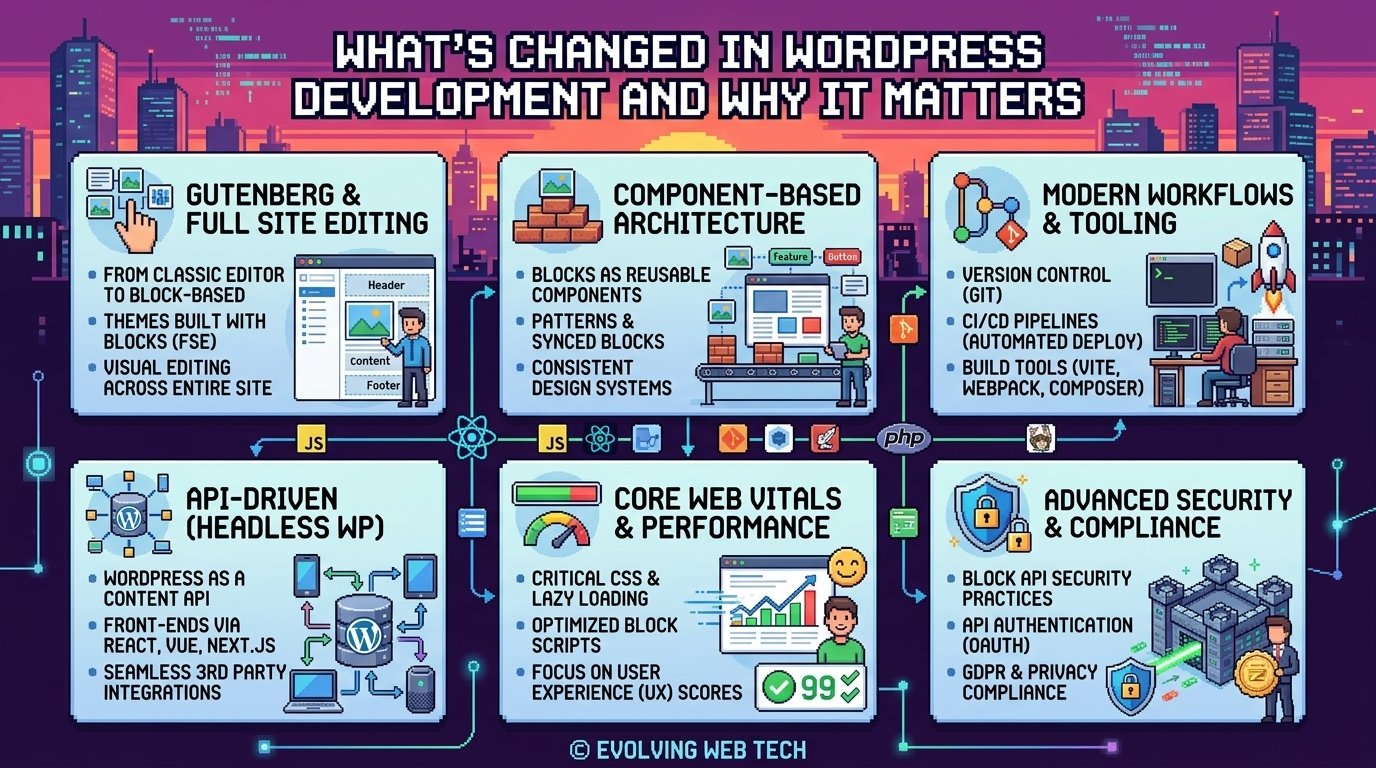
If you want to know what is needed for modern development, one way is to analyze the growth of WordPress.
The very first things with WordPress were mostly about themes and plugins. You just chose a theme then installed your plugins. After adding some content, you called the job done – this was the website. This age birthed lots of the usable sites – and also slow, insecure and easily broken ones.
The change started around 2015, when Google decided to consider the mobile experience of users in their ranking systems. Thus, responsive design ceased being only an element “nice to have” and instead became a ranking signal. By 2018, HTTPS was also considered a ranking factor. In 2021, Google formally included Core Web Vitals as one of the Page Experience signals – these are metrics for measuring loading performance, visual stability, and interactivity which are directly used by the search algorithm to determine the visibility in the search results.
Each one of these changes simultaneously took the art of developing WordPress sites further away from the drag-and-drop realm and brought the development work to as an engineering level.
Nowadays, a skilled wordpress website developer isn’t merely building pages. They’re making major decisions about the technical architecture:
- How to optimize database queries so that performance doesn’t degrade as the volume of content increases
- What caching methods to implement, like Redis caching or full-page caching at the server level
- How to set up a Content Delivery Network that will deliver static files from distributed global locations
- Techniques like JavaScript deferral and lazy loading that help improve Largest Contentful Paint (LCP) metrics
- Deciding on the fundamental structure of the theme whether to go for a block theme, a classic theme, or a headless setup
- Managing plugin conflicts and carrying out ongoing compatibility maintenance
Business owners are not expected to handle all of this alone and generalist freelancers, on the other hand, are not capable of managing with reliability these things at a large scale.
So, What a WordPress Developer Does Actually?
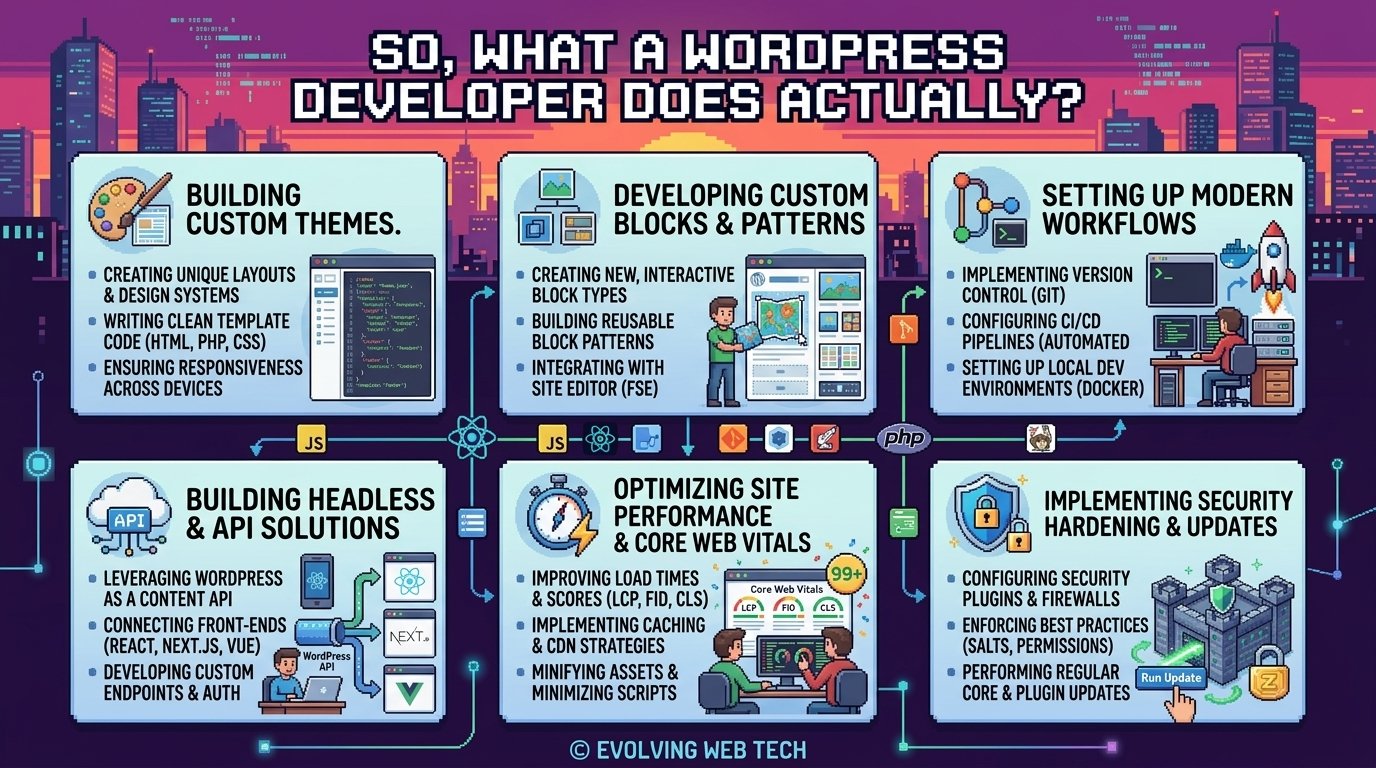
It’s one of the biggest questions from businesses and the straightforward answer is: it depends on what the project is about.
Simply put, a WP developer codes and customizes PHP HTML CSS, and JavaScript. They can create entire custom themes or work on existing ones. They also write or change plugins to include some features that are not available immediately.
However, this list of tasks is not limited to only coding.
A diverse and skilled professional delivering WordPress website development services may
- Discovery and technical planning – before developing a single line of code, analyzing your business needs and mapping them to a development plan
- Custom theme development – crafting a design that is not only visually consistent with your brand but also technically optimized for speed
- Plugin development and integration – increasing WordPress capabilities while addressing performance and security concerns
- Database Structure – building unique post types, taxonomies, and fields to handle specific types of content and use cases for customers
- Third-Party Integration – connecting other systems such as CRMs, payment processors, marketing, or APIs with your site
- Performance Optimization – ensuring the performance of the site is measured according to Core Web Vitals and ensuring the site is fast and responsive on mobile devices
- Security hardening – executing actions such as file permission settings, login protection, malware detection, and WAF adjustments
- Ongoing maintenance and updates – upgrading WordPress core, themes, and plugins in the most recent versions without running into issues with currently installed functionalities.
A lot of companies hire a WordPress designer on their own, Mostly if the layout and coding need separate minds. That said, others team up with agencies that do both jobs at once.
One route isn’t better than the other, it comes down to how detailed the site needs to be, how much money they have, and how fast things must move.
How can you tell if you are hiring the correct individual?
It is really tough to find the right talent. The market for WordPress developers varies from self-taught beginners offering the cheapest rates to senior developers with decades of experience. All these different types of developers are present in the same recruiting pool, and the distinction is not always clear from a proposal.
Below are some practical signs of true expertise:
- Post-production updates are tested in staging first, never rushed into live sites.
- Caching, CDNs, and image tweaking come up as routine practices, not add-ons pushed to earn fees.
- Child themes or custom builds are discussed honestly, including which fits the site’s needs better.
- They walk through how they ensure WCAG 2. 1 accessibility standards are met properly.
Red flags
- Red flags appear when prices are given upfront without digging into the content setup.
- A page builder is pitched without addressing load speed consequences.
- No clear plan exists for fixing issues after launch – which matters generally.
- They can’t explain how their changes will actually shift Core Web Vitals results.
“The companies that get the highest return on investment in the long run from their WordPress websites are those that prioritise the structural planning of their site before the look and feel. A stylish website that is based on a poor technical groundwork will always produce poor results – and rectifying it later will cost more than doing it properly from the beginning.”
Daniel Kowalski, Senior WordPress Solutions Architect, WPCarePoint
Performance, SEO, and Security: The Three Pillars No Website Can Ignore
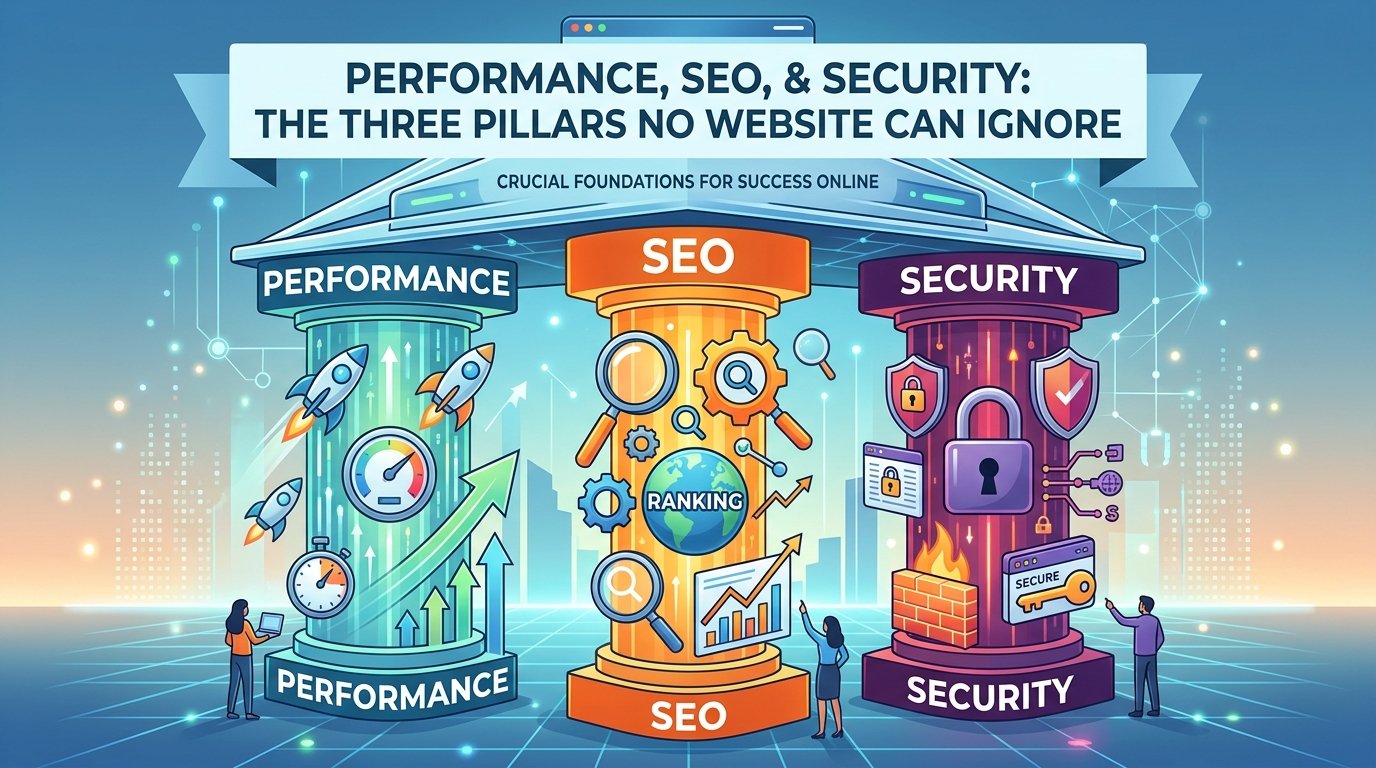
These three areas are so interconnected, if you treat them separately, it’s a strategic mistake.
Performance
Google’s Core Web Vitals framework focus on performance measurement by assessing three major web usability metrics:
Google’s Core Web Vitals framework measures three key signals:
| Metric | What It Measures | Good Score |
| Largest Contentful Paint (LCP) | How fast the main content loads | Under 2.5 seconds |
| Interaction to Next Paint (INP) | How quickly the site responds to interaction | Under 200ms |
| Cumulative Layout Shift (CLS) | Visual stability during page load | Under 0.1 |
Sites that do not meet these criteria will have their ranking lowered – even if their content is extremely strong. An experienced WordPress professional aims for three at the very beginning rather than only employing them when all other means have been exhausted.
SEO
Technical SEO is by no means limited to the aspect of keyword density or the use of meta tags. It also encompasses:
- Clean URL structure with well-organized pages
- Schema markup for rich snippets
- XML sitemap creation and robots.txt setup
- Canonical tag to inform search engines about the main version of a page
- Internal linking strategy that helps distribute link value
If you want to get great results, come up with a web agency and SEO blog writing service that really understand the technical as well as the content aspects of search visibility.
Security
Unlike other CMSs, WordPress is targeted most of the times by attackers because it is the most widely used platform. Essential security measures that need to be taken for any live/production site are:
- Two-factor authentication on all admin accounts
- Web Application Firewall (WAF) — either at the plugin level or server level
- Automated malware scanning with alerting
- Database prefix changes and file permission audits
- Regular, tested backups stored off-server
Disregarding security is not only a matter of endangering a breach but also of endangering losing SEO rankings, user trust, and even getting a legal issue if customer data is compromised.
What Will Modern WordPress Sites in 2025 and Later Need to Have?
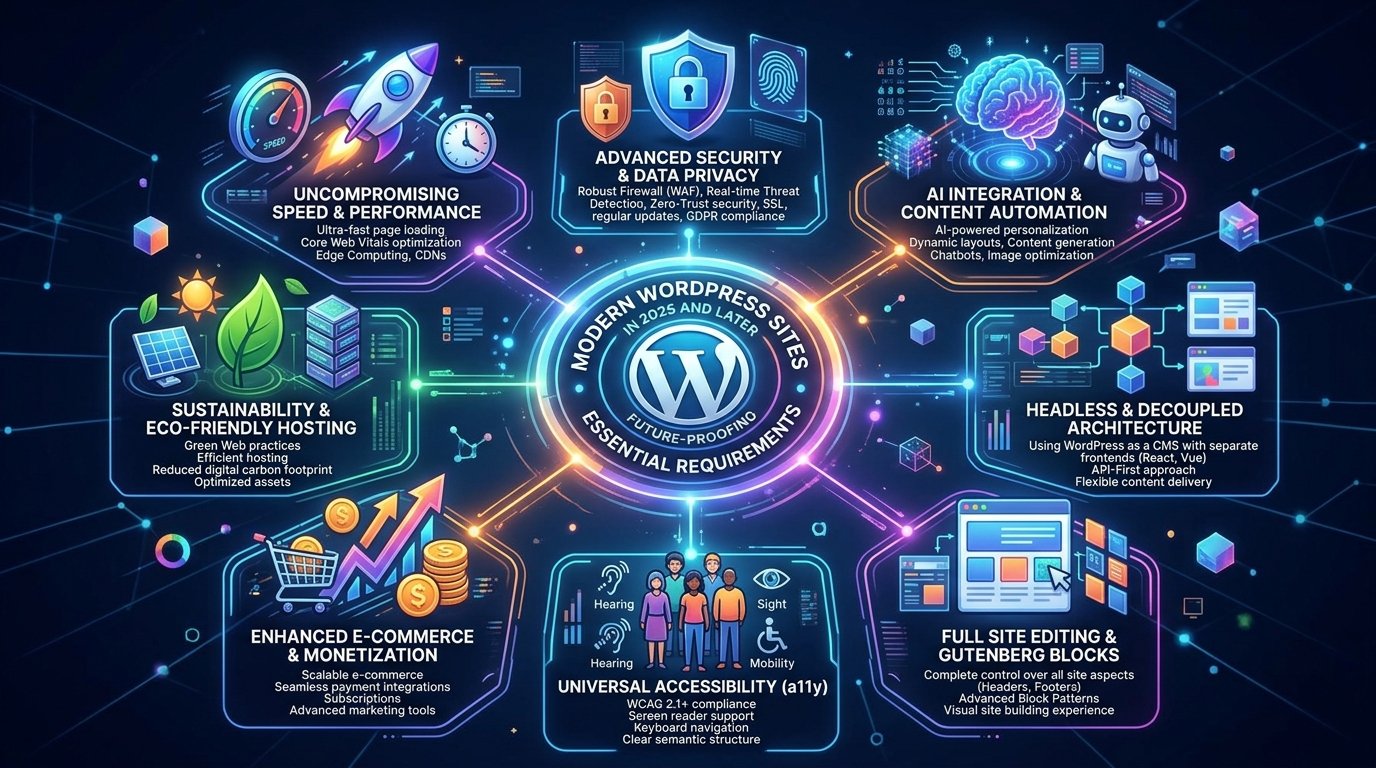
Online development changes all the time, websites that have been built two or three years ago only might be not meeting today’s norms.
Accessibility has not only become a best practice but also a legal issue in many jurisdictions. WCAG 2.1 Level AA compliance entails keyboard navigation, providing sufficient color contrast, using proper heading hierarchy, and giving descriptive alt text these tasks do not just get done on their own even if you are using a certain theme.
Page speed on mobile has gone beyond being a mere performance metric; it is now a conversion metric. Several research works show that users on mobile will leave sites that take more than three seconds to load. As mobile traffic constitutes over 60% of the world’s web usage, this becomes a revenue concern directly.
Headless WordPress is increasingly being used in high-performance situations, where WordPress backend is used for content management while front-end rendering is done by a JavaScript framework like Next.js or Gatsby. This change can bring about a huge improvement in speed but it would certainly require the expertise of wordpress plugin developer and a dev team proficient in API-driven architecture.
Dynamic content starts showing up on mid-size WordPress sites, driven by AI-driven personalization and CRM-linked behavior tracking. The result, plus visitors see tailored experiences that mirror their past actions, which builds stronger engagement over time.
Choosing the right WordPress website design agency for you
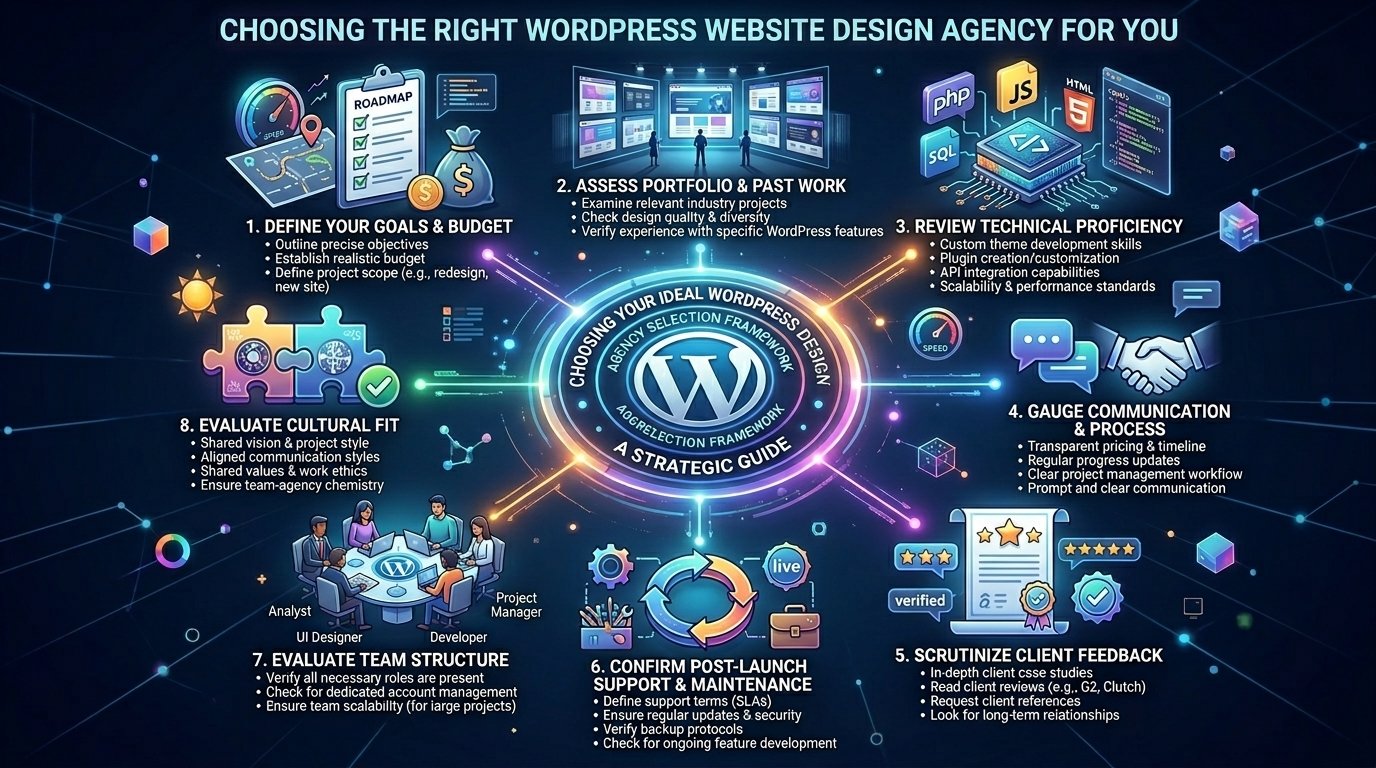
It doesn’t matter if you want a local expert or a remote team, the way you judge the candidates has to be the same.
Check their work really well – not just the look:
- Are their previous websites getting top scores on PageSpeed Insights?
- Not only can they show examples of custom functionality they’ve developed but also ones that they have configured?
- Have they served your sector or dealt with a company of similar scale and complexity?
Find out what their development process is like:
- What system do they use for version control? (At least, they should be using Git.)
- Can you describe their staging and QA process?
- What do they document about custom code for future maintainability?
Get to know what their post-launch model is:
- Do they provide ongoing maintenance or do they hand over and disappear?
- How do they usually solve plugin compatibility problems following the major WordPress releases?
Leading agencies aren’t just one-time contractors. Instead, they are long-term technology partners who help a client for years, not just during the launch.
Is hiring a WordPress developer worth the investment?
Before buying, it is natural that business owners might be wondering about the return of investing in WordPress developers. So, to make it a good read, let’s first take the question of ROI.
The short answer is that there is no definitive answer, as the ROI can be directly related to what you are measuring it against.
Compared to a DIY website builder? A professionally built WordPress site will almost always score better in speed SEO customizability, and scalability especially when your business starts to outgrow the simple basics of a drag-and-drop tool.
Compared to a cheap, hastily built WordPress site? At first, the numbers might be a bit puzzling but, in the end, the truth comes out. Sites that are set up without the mindset of performance, security, and scalability usually need a partial or even a full rebuild within two to three years. The expenses for those rebuilds along with the drops in rankings, loss of conversions, and security breaches in the meantime generally far outweigh the initial savings.
The compounding returns of professional development are:
- Better search rankings as a result of properly implemented SEO technically
- Decrease in bounce rates as a consequence of improved, faster and more user-friendly experiences
- Mitigation of security breach risk as well as the operational disruptions caused by such incidents
- Ability to add new features as your company changes
- A codebase that is maintainable and well-documented, and which doesn’t rely solely on the knowledge of one developer
When companies are looking at the cost of professional wordpress website development services, they should be considering it with respect to the entire lifecycle of the website – not just the initial billing.
Frequently Asked Questions
What is a WordPress developer, and how are they different from a web designer? A WordPress developer focuses on the technical build of a site — writing code, configuring server environments, building custom functionality, and ensuring performance and security. A web designer focuses on the visual and user experience aspects — layout, typography, color, and brand expression. Many professionals have overlapping skills, and many agencies offer both under one engagement.
How long does it take to build a professional WordPress site? A straightforward informational site with 10–15 pages typically takes four to eight weeks from discovery to launch. Complex sites with custom post types, integrations, e-commerce, or bespoke functionality can take three to six months. Rushing this timeline is one of the most common causes of post-launch problems.
How much does it cost to hire a WordPress developer? Rates vary significantly based on experience, location, and project scope. Freelancers typically range from $50 to $200+ per hour. Agencies often work on project-based pricing, with serious professional builds starting around $5,000–$8,000 for foundational sites and scaling into the tens of thousands for complex builds. Ongoing maintenance retainers are typically separate.
Do I need ongoing maintenance after my site launches? Yes — almost always. WordPress core, themes, and plugins release updates regularly. Without maintenance, a site becomes progressively more vulnerable to security threats and more likely to experience compatibility issues. Most professional agencies offer maintenance packages that cover updates, backups, uptime monitoring, and minor content changes.
What’s the difference between a WordPress theme and a custom build? A premium theme is a pre-built design framework that you customize to fit your brand. A custom build starts from scratch (or from a minimal starter theme) and is engineered specifically for your requirements. Custom builds typically outperform premium themes on speed and are easier to maintain long-term, though they require more upfront investment.
Can WordPress handle enterprise-level traffic and complexity? Yes — when properly architected. Major brands, government institutions, and high-traffic news organizations run on WordPress. The key is appropriate server infrastructure, caching configuration, database optimization, and experienced development. WordPress itself is not the ceiling; the implementation is.
How do I know if my current WordPress site needs a rebuild versus an optimization? A good diagnostic starts with a technical audit. If your Core Web Vitals scores are poor, your codebase is heavily dependent on outdated plugins, your theme is no longer supported, or your security posture is compromised, a rebuild may be more cost-effective than remediation. A professional agency can assess this honestly — a trustworthy one will tell you when optimization is sufficient.
Building for the Long Term: What Separates Good Sites from Great Ones
The businesses that derive the most sustained value from their WordPress websites share a few common traits. They treat their website as infrastructure, not a one-time expense. They invest in professional expertise from the start, rather than patching together a solution that requires constant firefighting. And they work with development partners who understand both the technical and business dimensions of digital performance.
A well-built WordPress site isn’t just a marketing asset — it’s a scalable business platform that grows with you. It handles increased traffic without degrading in performance. It integrates with the tools your team relies on. It adapts as your service offerings evolve. It remains secure, accessible, and search-visible through algorithm updates and industry changes.
That kind of resilience doesn’t happen by accident. It’s the result of deliberate architecture, industry-standard practices, and the kind of ongoing stewardship that comes from a genuine long-term partnership.
If your current website isn’t delivering that, or if you’re building something new and want to do it right from the start, the next step is a conversation.
Contact WPCarePoint today to get started.