Boost your website’s performance with our Page Speed Optimization Service. We use 7 proven strategies—like image compression, caching, minifying code, and CDN integration—to make your site faster, improve SEO, and keep visitors engaged.
Why sky-high page speeds will soon be a reality for business owners?
Business owners can’t afford to ignore their page loading speeds anymore. If the site is slow, you’re losing out financially, credibility-wise, and in growth opportunities. For business owners and those making decisions for their companies, page loading speeds are no longer just a technical nice-to-have but a direct driver of revenue, search exposure, accessibility, and brand trust.
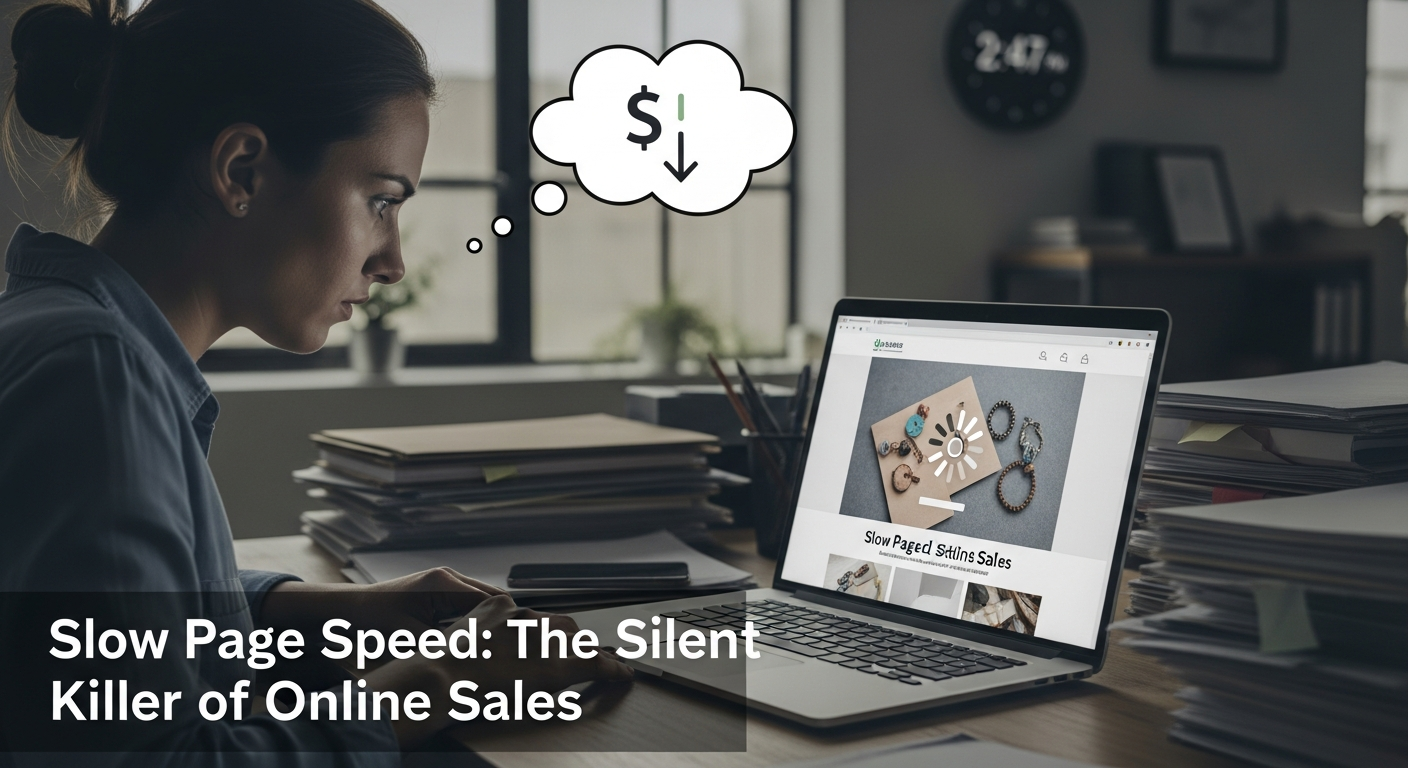
A professional page speed optimization service connects your site performance to business outcomes rather than merely delivering a technical score. In a world where consumers and businesses can’t hold your hand, as time becomes increasingly precious and one click away from going elsewhere, the baseline expectation is speed. Google, your consumers, and even payment processing platforms today expect you to provide fast, stable, and accessible website pages.
Quick Insights
- Speed optimization refers to the methods used to improve how quickly a web page loads and renders, resulting in your site’s pages becoming interactive for visitors at all times and on any combination of devices and networks. Speed optimization is crucial for businesses as it directly impacts SEO, conversion rates, accessibility, and overall operational performance.
- From a technical standpoint, page speed optimization will focus on reducing server response times, bandwidth used for sending files, improving the quality of the code on your site, and how efficiently browsers render your site’s content to end-users. From a business perspective, it seeks to eliminate friction between the brand and its customer base.
- According to data from Google, when the page load time increases from one second to three seconds, the likelihood of users experiencing a bounce rate goes up by 32%. When it increases from one second to five seconds, the bounce rate increases dramatically to 90%. These numbers are not merely statistical. They equate to lost leads, incomplete purchases (i.e., shopping cart abandonment), and decreased consumer trust.
What is page speed optimization, and why does it matter for real businesses?
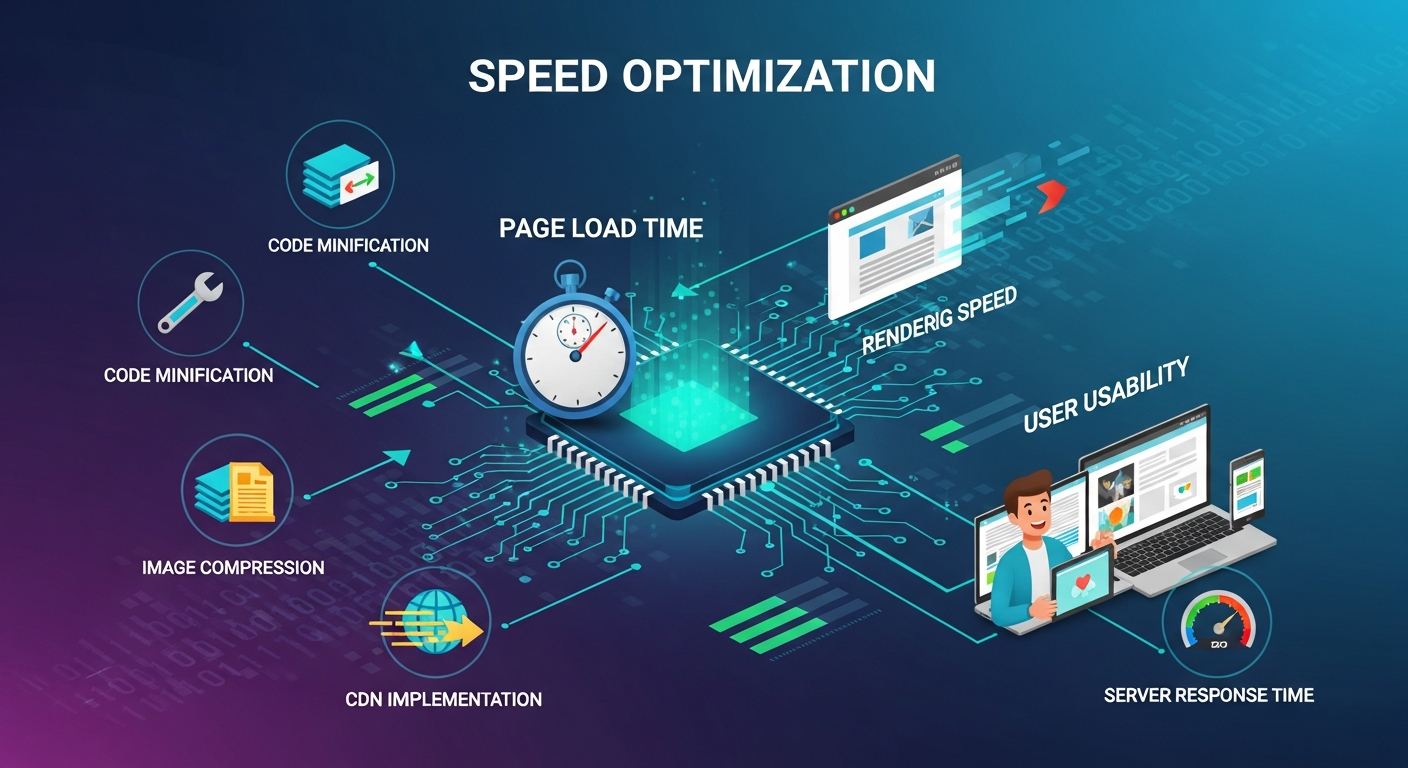
Page Speed Optimization focuses on enhancing how fast a webpage loads, renders, and becomes usable for different users, based on device and connection type. For businesses, speed optimization directly affects search engine ranking (SEO), company conversion rate, and accessibility of the website, along with their operational efficiencies.
Speed Optimization is primarily a technical function focused on page load speed, including server response time, asset delivery, code efficiency, and browser rendering. It also affects business by improving the user experience (removing friction) between your brand and the user (customers).
According to Google research, for a 1-second increase in page load time, the likelihood of a user bouncing increases by 32%. For a 5-second increase in page load time, the likelihood of a user bouncing increases by 90%. These are numbers illustrating how speed optimization translates to businesses losing prospective leads, consisting of such things as abandoned carts and distrust in the business.
How did page speed standards evolve in WordPress and modern web platforms?
The web’s performance has changed significantly over the last 10 years, with early WordPress sites being built with design and content as the primary focus. However, there was very little thought about efficient backend performance. It was typically a case of shared hosting, large, bulky themes, and unoptimized images.
With WordPress 5.5 and later, the core of WordPress has built-in performance optimization features, and the baseline is raised with the advancement of natively implemented lazy loading, new/improved image handling, and new block-based rendering. There have also been huge performance improvements with the advances made in PHP from the 5.x to the 8+ range.
Google has introduced its new Core Web Vitals, which shifted the emphasis from “how fast does it load” to “how fast does it feel”.
This evolution means modern page speed optimization is no longer about shortcuts. It requires alignment with current standards and future scalability.
What do Google PageSpeed and Core Web Vitals actually measure?
- Largest Contentful Paint (LCP) – Measures how well your website loads
- Interaction to Next Paint (INP) – Measures the responsiveness of the website
- Cumulative Layout Shift (CLS) – Will assess how well the page holds its layout while it loads
A page speed optimization company will improve on the core vitals as a whole (i.e., not by trying to cheat the score). Improving LCP can usually be accomplished through:
- Optimizing server response time
- Delivering images appropriately
- Loading fonts in an optimal way
Improving CLS can be accomplished by:
- Revising your site layouts
- Reserving space for media elements
- Handling ads properly

Why is page speed optimization important for your SEO and rankings?
Search engines have the goal of giving people the best experience they can possibly have. A fast page makes it easier for crawlers to index, helps keep users engaged and happy, thereby giving search engines indirect signals that the page is an important one.
According to Google, page speed is a ranking factor when it comes to mobile devices, so having a slow website will slow down crawler spending, just like poor indexing will affect a large site.
In addition, speed will impact other behavioral metrics (indicators):
- time on a site
- pages viewed per visit
- conversion rates
These are all factors used by search engines when determining how relevant or of high quality your content is.
How do page speed tests like GTmetrix and PageSpeed Insights help?
Testing page speed through GTmetrix or PageSpeed Insight can provide valuable insight into performance, including the following:
- Any render-blocking resources
- Any excessive JavaScript execution
- Any inefficiencies within the images
- Any issues with server latency
However, automated performance tools can sometimes recommend generic solutions. If applied incorrectly, the recommended solutions may affect layout/functionality/accessibility.
Therefore, you will want to work with a consultant to interpret your page speed optimization test results within the context of your project—not simply following the scores blindly.
What are the components of a professional page speed optimization service?
Professional page speed optimization should not only include caching plugins and minification; it should also provide a structured manner to make sure your website meets all business objectives.
Components might include:
- Server Hosting Evaluation
- CDN and Caching Strategy
- Image Optimization and Delivery
- Code and Database Optimization
- Core Web Vitals Improvements
- Compliance and Accessibility Checks
- Ongoing Support and Maintenance
By providing these services in a structured manner, you ensure that the optimization will provide long-term stability as opposed to short-term score improvements.
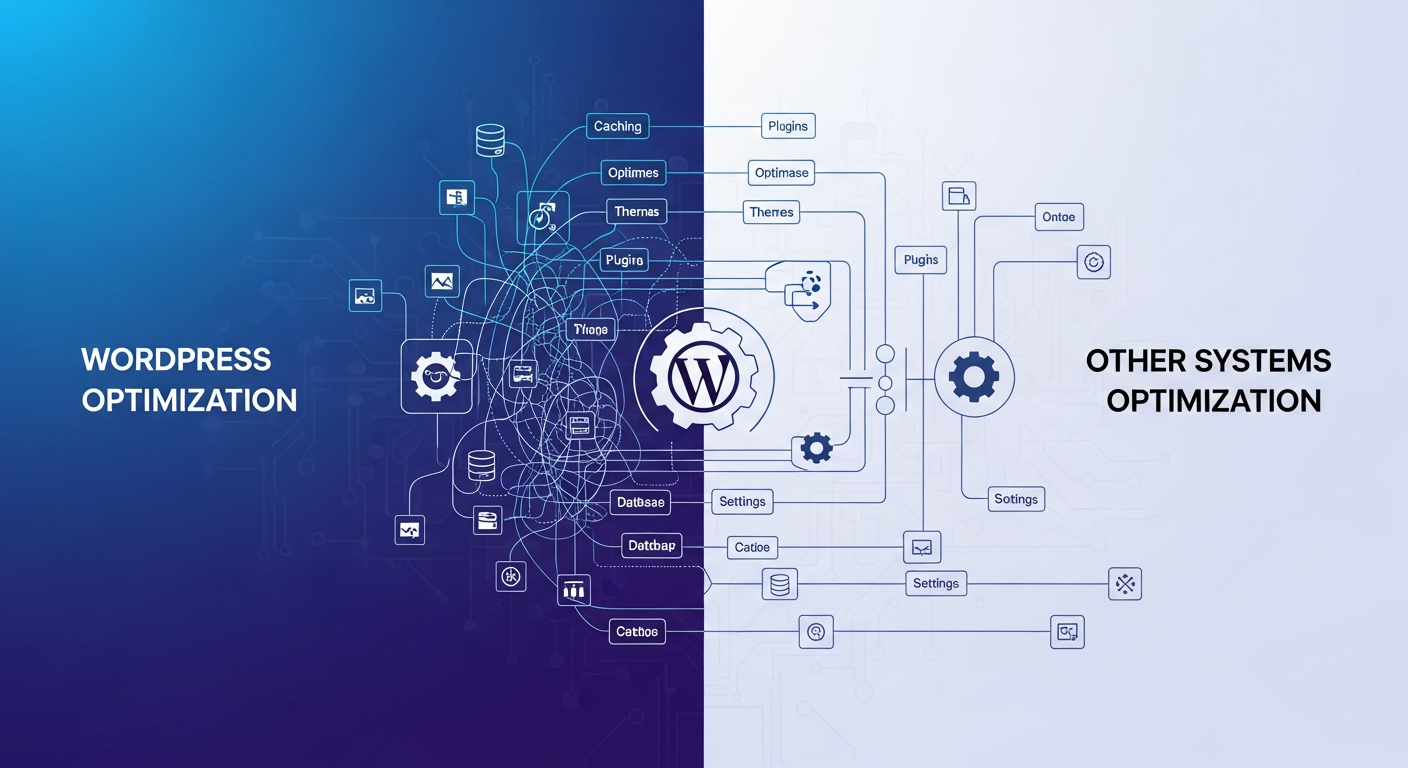
How does WordPress speed optimization differ from other platforms?
WordPress optimization varies drastically from other systems. There are differences in page speed optimization because the WordPress platform is different than that of others, and thus, specific experience is required to optimize it.
Strengths and challenges focus on important criteria:
- The architecture of the theme and the way blocks are built within that theme.
- The effect of plugin performance on overall website performance.
- The efficiency of database queries.
- If the PHP version used is compatible with the other software.
- The use of object caching (Redis/Memcached).
In comparison to this, Shopify cares comparatively less about those criteria and more about things such as limiting theme customization, app loads affecting the store, and rendering of storefront data.
Therefore, a one-size-fits-all approach for speed optimization does not work across all systems. A one-size-fits-all approach does not work across platforms.
What are the real business risks of ignoring page speed optimization?
Failure to consider page speed leads to compounding risks for a business:
- Low Revenue: Slow-loading pages convert less than their faster counterparts.
- Security Risks: Often, outdated systems correlate with performance issues, which can affect the performance of your website.
- Declining SEO: Competitors with faster loading websites will be more visible than your website.
- Limits to Scale: Slow loading conditions can create issues scaling your infrastructure to support growth (or spikes in growth).
Performance issues are frequently indicative of deeper issues in the structure of your company. Addressing speed issues early in the process will reduce the long-term cost of maintenance due to technical debt.
How does optimizing a web page’s speed help with accessibility and compliance?
Accessibility and performance are interconnected. If a webpage has slow load times, users with disabilities using assistive technology, as well as users on a low-bandwidth connection, are severely affected.
WCAG 2.1 has outlined standards related to accessibility, such as:
- Predictable layout through cumulative layout shift (CLS)
- Keyboard interaction responsiveness through input delay (INP)
- Delivery of readable content
Improving your site’s optimization performance will enhance overall usability for all users; additionally, it will minimize legal liability and enhance your online reputation.
What role does security play in page speed optimization?
Security has a significant impact on page speed optimization because security isn’t the direct opposite of speed. There are many instances where proper security hardening can lead to improved performance.
Examples-
- Using a secure, optimized hosting provider can also minimize the amount of malicious traffic that may slow you down.
- Writing clean codebases will also reduce your code’s attack surface.
- Using efficient firewalls or content delivery networks (CDN) can help filter out threats without impacting your delivery speed.
- A reputable professional service will work to optimize performance while still adhering to the highest possible standards regarding all aspects of information security.
How is page speed optimization pricing typically structured?
How is pricing usually established for page speed optimization services?
Page speed optimization service costs vary depending on the type of service provided, the environment in which it is provided, and how complex the fix will be for each specific situation. Some inexpensive fixes will give you a short-term solution, but will not deliver consistent results once put under load.
Here’s a general comparison:
| Service Level | Typical Scope | Best For |
| Basic | Caching, images, and audits | Small sites |
| Advanced | Core Web Vitals, server tuning | Growing businesses |
| Ongoing | Monitoring, updates, scaling | Enterprises |
Transparent pricing will reflect the long-term value of the services provided, rather than simply reflecting the cost of initial setup.
Does Page Speed Optimization Affect ROI & Growth Readiness?
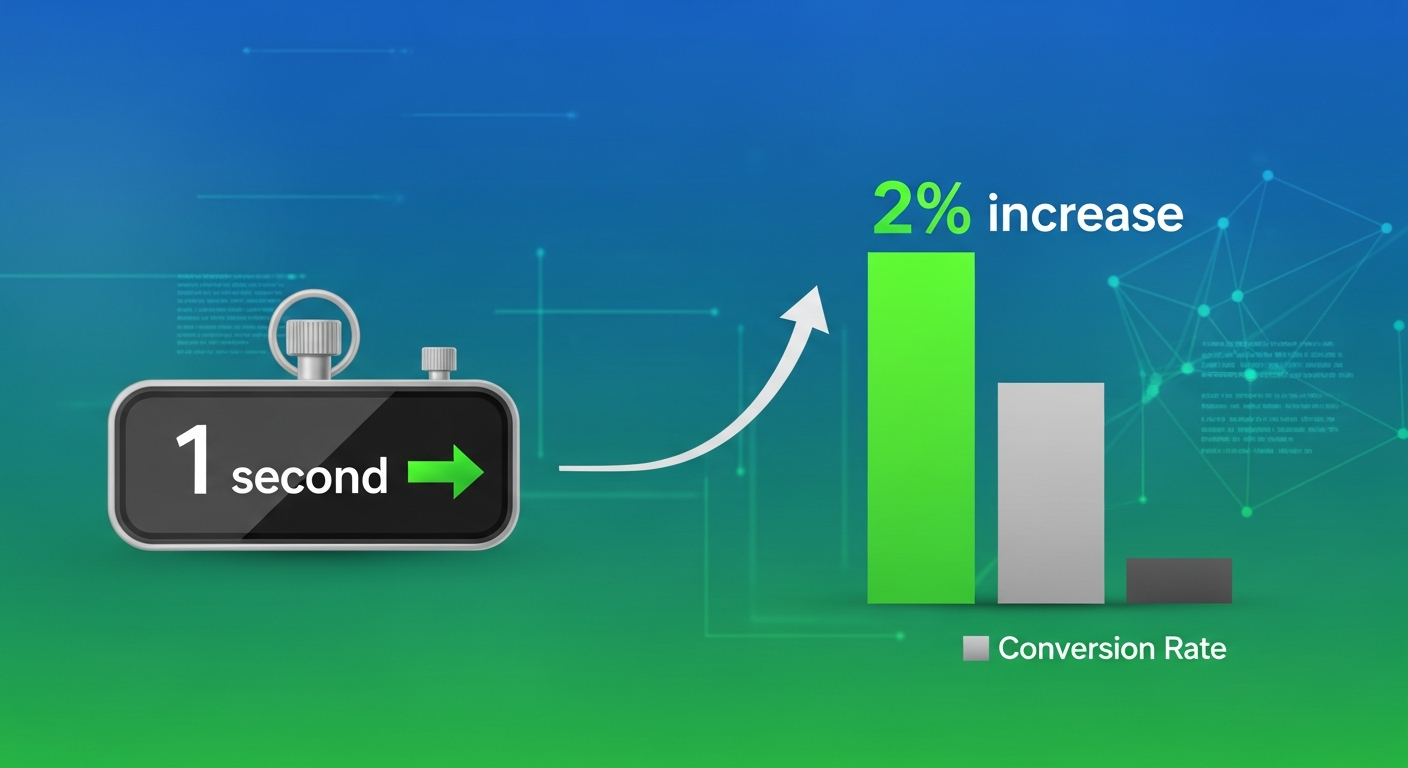
There are quantifiable returns from speed enhancements. For example, Walmart’s stats show that a 1-second speed improvement results in a 2% conversion increase. This trend exists across different sectors.
- Site Speed Enhancements Will
- help with conversions
- improve reliability/scalability
- eventually lower infrastructure costs
- increase customer satisfaction
Overall, Page Speed Optimization is not an expense, but rather an investment into growth.
What will page speed optimizations look like in the future?
The answer is clear when considering:
- Metrics Based on Real-User Experience
- Utilizing Edge Computing and Developing Smarter CDNs
- Using AI to Help with Performance Monitoring
- Implementing More Strict Accessibility and Privacy Standards
- Future-Proofing Your Site Optimization is Essential
As the WordPress Core continues to be updated and PHP continues to advance, the Future will Keep Up And Also Meet The Performance Expectations Set By Google.
Why speed matters today: An expert perspective
Performance has moved from just a technical item checked off to now being a part of a brand promise. Users see speed as professionalism when experiencing it. Barry Pollard, Google Web Performance Developer Advocate
How might companies look to adopt speed optimization into their long-term strategy?
The most successful companies take on speed as a continual effort, which creates inherent synergies with other service verticals:
- Website Maintenance
- Performance Optimizations
- Security Hardening
- Technical SEO
Integrating all those aspects into a cohesive strategy helps mitigate risk and improve consistency across digital properties.
What criteria should you consider when selecting a partner for optimizing page speed?
Beyond looking at their tools and promises, think about:
- Do they have a good understanding of your business objectives?
- Can they clearly communicate the pros and cons of their services?
- Are they compliant with WordPress Core and other relevant web standards?
- Have they developed an effective way to plan for future growth?
Experience (broad, overall) matters more than necessarily looking at individual metrics.
Why is a page speed optimization service a long-term asset?
A Page Speed Optimization Service delivered by professionals provides you with more than just faster loading web pages; it builds trust, increases visibility, enhances accessibility, and positions your website for ongoing growth. Speed is now a fundamental and must-have characteristic within any business operating in today’s global competitive marketplace.
Investing in your Performance Today will provide you with protection from future losses in sales or customers for your business. Contact WPCarePoint today to start building a stronger web presence!
Frequently Asked Questions
Do fast blog loads keep people reading?
Yes! The quicker your blog loads, the more likely people will stick around. Also, blogs that load quickly perform better in search engines than those that load slowly, and they generate more interest in the content of the blogs, particularly on mobile devices.
Can my website break if I optimize my page speed?
If the optimization process is done incorrectly, it is possible. Experts will verify that all the changes are completed properly before they take effect to ensure normal functions remain unchanged and that accessibility is still available.
How often should I check my page speed?
It’s recommended that you monitor your page speed regularly, particularly after any updates (suggested content), adding any new content, or a spike in traffic to your site.
Will page speed optimization lead to higher conversions?
Yes! Faster Websites tend to have more conversions than slower websites, and generally, Websites with faster load times have lower bounce rates than slower Websites.
Is page speed optimization a one-time task?
No. Page speed optimization requires continuous optimization to keep your website running smoothly with any future updates or changes to traffic levels and web standards.