
Protect your site with professional WordPress care plans. Ensure 99.9% uptime and elite security. Get expert support from WPCarePoint today!
WordPress care plans are comprehensive service packages designed to automate the security, maintenance, and performance optimization of your website. By investing in these plans, businesses ensure their digital assets remain updated, backed up, and protected against evolving cyber threats, allowing owners to focus on growth rather than technical troubleshooting.
Key Takeaways
- Maximum Security: Professional WordPress care plans include real-time threat monitoring and immediate patching of core files and plugins.
- Performance Optimization: Routine database optimization and image compression keep your site compliant with Core Web Vitals.
- Disaster Recovery: Daily off-site backups ensure your data can be restored instantly in the event of a server failure or hack.
- Cost Efficiency: Preventing a major site crash is significantly cheaper than hiring emergency developers for hourly repairs.
Why are WordPress Care Plans Essential for Modern Businesses?

In the current digital landscape, a website is no longer a “set it and forget it” asset. As of 2026, WordPress powers 43.5% of all websites on the internet. This massive market share makes it a primary target for automated bot attacks and sophisticated malware.
Without a dedicated care plan, business owners often fall behind on critical updates. Statistics show that nearly 60% of hacked WordPress sites were running outdated versions of the CMS or its plugins. A care plan bridges this gap by providing a proactive shield. It transforms your website from a liability into a high-performing engine that supports your sales and marketing goals 24/7.
How Do WordPress Maintenance Plans Differ from Standard Hosting?
Many business owners mistakenly believe that their hosting provider handles website maintenance. While managed hosting provides the “house” for your site, WordPress care plans look after everything inside that house.
Comparison: Managed Hosting vs. Comprehensive Care Plans
| Feature | Standard Managed Hosting | Professional Care Plans |
| Server Uptime | Included | Monitored & Verified |
| WordPress Core Updates | Automated (Generic) | Tested & Managed (Manual Review) |
| Plugin/Theme Updates | Not Included | Included (Compatibility Tested) |
| Malware Removal | Extra Charge | Often Included/Proactively Prevented |
| Content Edits | Not Included | Included in Premium Tiers |
| Performance Reports | Basic Logs | Detailed Growth & SEO Insights |
What are the Core Benefits of Professional WordPress Support Services?
When you subscribe to WordPress support services, you are essentially hiring a specialized technical team for a fraction of the cost of a full-time employee. These services extend beyond simple updates; they focus on the health and longevity of your digital presence.
Is Real-Time Security Monitoring Necessary?
Yes. In 2026, cyber threats are largely AI-driven. A professional service uses Web Application Firewalls (WAF) and IP reputation tracking to block malicious traffic before it even reaches your login page.
Why is Cloud Backing Up Superior to Local Backups?
Local backups (stored on your web server) are useless if the server itself is compromised. Professional WordPress care plans ensure your data is stored in encrypted, redundant cloud locations like Amazon S3 or Google Cloud, ensuring a 100% recovery rate.
“Maintenance is not an expense; it is the insurance policy for your brand’s reputation. A single hour of downtime can cost more than a year of professional care.” — Mark Sterling, Senior Web Architect.
How Do WordPress Management Services Improve Your SEO?
Google’s algorithms increasingly prioritize user experience (UX) and technical stability. WordPress care plans directly impact your rankings by addressing the “behind-the-scenes” factors that AI-driven search engines (GEO) look for.
- Speed Optimization: By cleaning up database overhead and optimizing scripts, care plans ensure your site loads in under two seconds.
- Uptime Reliability: Search engines penalize sites that are frequently down. Care plans provide 24/7 monitoring to resolve outages instantly.
- Link Health: Regular scans for broken links prevent “404 errors” from frustrating users and degrading your site’s authority.
How has WordPress Website Care Evolved Over the Years?
The Past: The Manual Era
In the early 2010s, maintenance was a manual chore. Developers would log in once a month, click “update,” and hope nothing broke. If a site crashed, the recovery process took days.
The Present: The Automated & Proactive Era
Today, WordPress care plans utilize automated regression testing. This means the system takes a “snapshot” of your site, performs the update in a virtual environment, checks for visual discrepancies, and only pushes the update to the live site if it passes the test.
The Future: AI-Integrations and Headless Architecture
By late 2026, care plans will integrate AI to predict plugin conflicts before they happen. Furthermore, as “Headless WordPress” becomes more common, care plans are evolving to manage decoupled front-ends (like React or Next.js) alongside the traditional WordPress backend.
Why is Website Maintenance Services Crucial for E-commerce?
For WooCommerce users, the stakes are even higher. A broken checkout page doesn’t just hurt your brand—it results in immediate lost revenue. Website maintenance services for e-commerce focus on:
- SSL Certificate Management: Ensuring transactions are always encrypted.
- Database Cleanup: Removing old cart sessions and expired coupons that slow down the database.
- API Monitoring: Checking that payment gateways (Stripe, PayPal) are communicating correctly with the store.
How Do Advanced WordPress Care Plans Facilitate Headless and Hybrid Architectures?
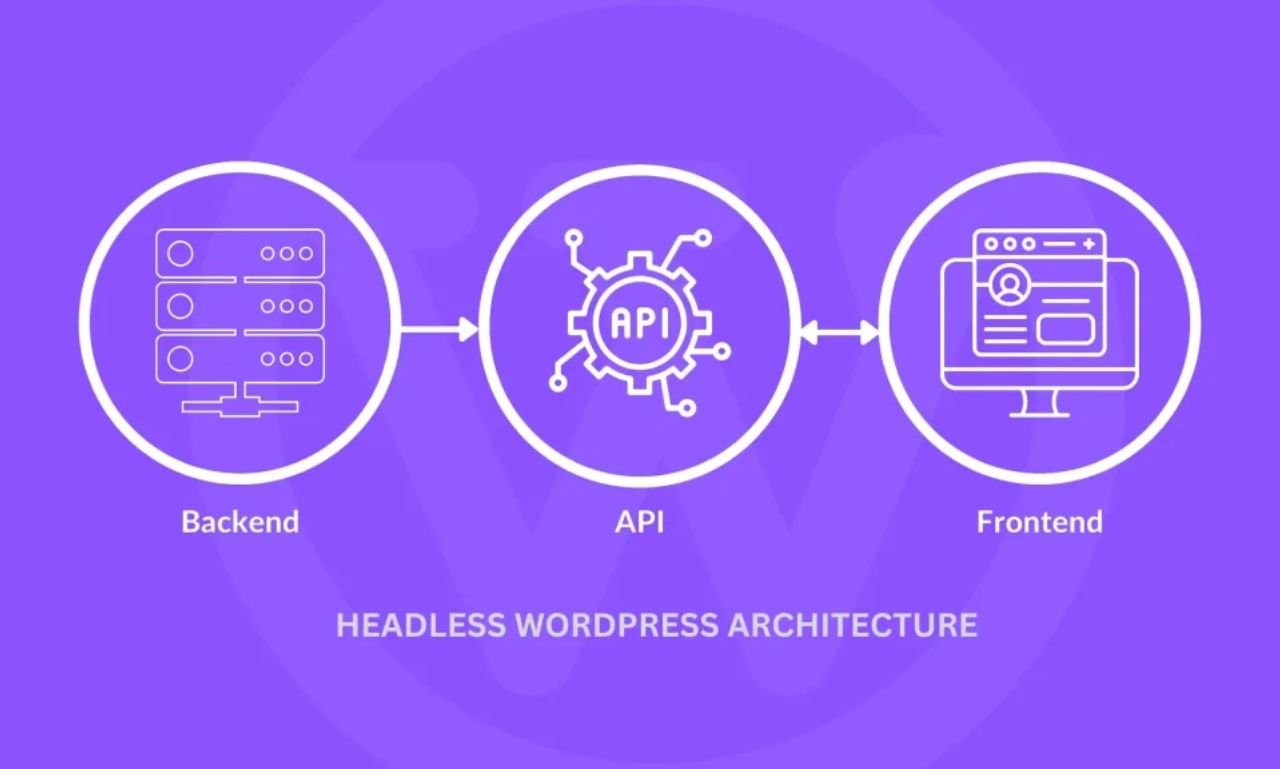
As we move further into 2026, the traditional “monolithic” structure of WordPress care plans is being challenged by the rise of headless and hybrid architectures. For the uninitiated, a headless WordPress setup involves using WordPress as the back-end content management system (CMS) while using a modern JavaScript framework—such as React, Vue.js, or Next.js—to render the front-end. This separation offers unparalleled speed and security, but it also introduces a new layer of complexity that standard WordPress care plans are only now beginning to address.
The Complexity of Decoupled Maintenance
In a traditional setup, when you update a plugin, you immediately see the impact on your live site. In a headless environment, the “head” (your front-end) and the “body” (the WordPress back-end) communicate via the WP REST API or GraphQL. If WordPress care plans do not specifically account for these API endpoints, an update to the core software could potentially “break” the connection, leaving your front-end high and dry with no content to display.
Advanced WordPress care plans now include “API Contract Testing.” This ensures that any changes made to the WordPress backend do not alter the data structure required by the front-end. Without this specialized oversight, the performance benefits of going headless are quickly negated by frequent downtime and integration errors.
Security in a Decoupled Environment
One of the primary selling points of headless WordPress is security. Because the front-end is static or server-side rendered, there is no direct path for a hacker to access your WordPress login page through the public-facing site. However, the API itself becomes the new attack vector.
Modern WordPress care plans for headless sites involve securing these endpoints using JWT (JSON Web Tokens) or OAuth2. A professional care plan will monitor these authentication layers to ensure that only authorized requests are processed. As 2026 sees more AI-driven brute force attacks on APIs, having a dedicated team to rotate keys and monitor request patterns is no longer optional—it is a baseline requirement for enterprise-level security.
What Role Does AI-Driven Predictive Maintenance Play in 2026 WordPress Care Plans?
The most significant shift in WordPress website maintenance over the last year has been the transition from reactive to predictive care. In the past, maintenance was about fixing what broke. In 2026, it is about using Artificial Intelligence to ensure that things never break in the first place.
Predicting Plugin Conflicts Before They Occur
The “Human-in-the-loop” AI models currently used by top-tier WordPress care plans analyze millions of update logs across thousands of websites. If a specific version of a popular SEO plugin is found to cause a conflict with a specific version of a PHP server in London, the AI alerts the maintenance team before they even attempt the update on your site.
This “Global Intelligence” network allows WPCarePoint to provide a level of stability that was previously impossible. Instead of your site being the “guinea pig” for a new update, the update is only applied once the AI has verified its stability across similar environments. This reduces the risk of the “White Screen of Death” to near zero.
Automated Performance Regression Testing
A common frustration for site owners is the “slow crawl”—the gradual decrease in site speed as more content and updates are added. AI-driven WordPress care plans now utilize automated visual and performance regression testing.
Every time a change is made, the AI takes a pixel-perfect snapshot of the site and runs a synthetic speed test. If the new update increases the “Largest Contentful Paint” (LCP) by even 100 milliseconds, the update is automatically rolled back, and a ticket is generated for a developer to optimize the code. This ensures that your site stays compliant with the strict Core Web Vitals that Google and other AI search engines demand for high rankings.
AI-Enhanced Security Heuristics
Static firewalls are a relic of the past. Modern WordPress maintenance plans leverage machine learning to identify “Zero-Day” vulnerabilities. By analyzing the behavior of traffic rather than just checking against a database of known threats, the AI can detect a hack attempt based on its intent. For example, if a bot starts probing your /wp-json/ directory in a pattern that mimics a known SQL injection technique, the AI-powered WAF (Web Application Firewall) will blacklist the entire IP range across all sites in the care network instantly.
Why is Technical Sustainability the New Standard for Website Maintenance?

In 2026, “Sustainability” isn’t just a buzzword for the environment; it is a critical metric for digital longevity. Technical sustainability refers to the practice of maintaining a website in a way that prevents “Technical Debt”—the accumulated cost of quick, messy fixes that eventually make a site unmanageable.
Reducing Technical Debt through Code Audits
Many website maintenance services simply update plugins and walk away. However, truly authoritative WordPress care plans include periodic code audits. Over time, even the best websites accumulate “ghost code”—functions left over from deleted plugins or outdated tracking scripts.
These remnants bloat the database and increase the server’s energy consumption. By performing regular “database pruning” and script optimization, WPCarePoint ensures your site remains “lean.” A lean site is not only faster but also more sustainable, requiring fewer server resources and providing a better experience for mobile users on low-bandwidth connections.
Future-Proofing for the “SGE” (Search Generative Experience)
As search engines evolve into AI-powered answering engines, the way content is served matters more than ever. Technical sustainability involves ensuring your site’s “Schema Markup” is always valid. Care plans now include regular checks of your JSON-LD data to ensure that AI crawlers can perfectly understand your products, reviews, and FAQs.
If your site’s structure is outdated, AI engines like Gemini or GPT-Search will ignore your content in favor of a competitor whose site is technically optimized for “Machine Readability.” Professional WordPress management services act as the bridge between your content and the AI engines that distribute it.
The Human Element: Expert Consultation
Finally, technical sustainability requires human expertise. While AI handles the bulk of the monitoring, the value of WordPress care plans lies in the strategic advice provided. Whether it is advising on when to migrate to a new hosting environment or helping you choose a plugin that won’t become “abandonware” in six months, the human element ensures your website grows in alignment with your business goals.
At WPCarePoint, we don’t just “maintain” sites; we curate them for the future. Our care plans are built on the philosophy that a website should get better with age, not slower and more vulnerable. By combining AI-driven predictive tools with deep human expertise, we provide the ultimate safety net for your digital presence.
Frequently Asked Questions (FAQ)
1. What is included in a typical WordPress care plan?
A standard plan includes daily off-site backups, WordPress core and plugin updates, 24/7 security monitoring, database optimization, and monthly performance reporting to track site health.
2. Can’t I just use a plugin to automate my WordPress website maintenance?
While plugins can automate some tasks, they cannot troubleshoot a “White Screen of Death” if an update fails. Professional WordPress care plans provide human oversight to fix issues immediately when automation breaks.
3. How often should WordPress maintenance be performed?
Maintenance should be a continuous process. Security scans and uptime monitoring should happen every minute, while backups and plugin reviews should happen daily or weekly, depending on site traffic.
4. Are WordPress management services worth the investment for small blogs?
Yes, because the cost of recovering a hacked site or a lost database usually exceeds $500–$1,000 in developer fees. Care plans provide peace of mind and prevent these catastrophic expenses.
5. Will WordPress care plans make my website faster?
Absolutely. Most plans include a performance audit and ongoing optimizations like image lazy-loading, CSS minification, and database indexing, which significantly improve loading speeds.
Conclusion: Securing Your Digital Future
Navigating the complexities of the modern web requires more than just a great design. It requires a commitment to technical excellence and security. By opting for professional WordPress care plans, you ensure that your website remains a robust, fast, and secure platform for your customers.
At WPCarePoint, we specialize in providing high-tier WordPress care plans that take the technical burden off your shoulders. Our mission is to allow you to focus on your business while we ensure your digital foundation is unshakeable. Whether you are scaling a small business or managing an enterprise-level site, proactive care is the key to longevity in 2026.
Would you like me to create a customized maintenance checklist specifically for your website’s current plugin stack?
Thanks for reading our article.
Developer at WPCarePoint
Booking for a 30-minute Free Consultation on Google Meet: Click here for an appointment today.
contact@wpcarepoint.com
www.wpcarepoint.com