
Master the Shopify website builder to launch a high-converting store. Discover expert tips from WPCarePoint and start your e-commerce journey today.
As a premier Shopify website builder, Shopify provides an all-in-one e-commerce solution that enables entrepreneurs to design, launch, and scale online stores with zero coding knowledge. By integrating hosting, payments, and inventory management into a single dashboard, it simplifies the complex process of digital retail, allowing business owners to focus on growth rather than technical infrastructure.
Key Takeaways
- All-in-One Infrastructure: Shopify provides hosting, SSL security, and payment processing out of the box.
- Design Flexibility: Access to hundreds of mobile-responsive templates tailored for high conversion.
- Global Scalability: Support for multi-currency, multi-language, and international shipping logistics.
- App Ecosystem: Over 8,000 apps to extend functionality for marketing, SEO, and inventory.
Why Is the Shopify Website Builder the Best Choice for E-commerce?

Choosing the right Shopify website builder plan is the first step toward building a sustainable online business. Unlike open-source platforms that require manual updates and security patches, Shopify is a “SaaS” (Software as a Service) solution. This means the platform handles all technical overhead, allowing you to focus entirely on sales and product development.
In 2026, the Shopify ecommerce platform has evolved to support not just small boutiques, but enterprise-level brands through Shopify Plus. With a market share of approximately 10% of the total US ecommerce market, it has proven to be the most reliable environment for high-volume transactions and seamless Shopify online store creation.
Why Choose the Shopify Website Builder Over Competitors?
When selecting a platform, the primary concern is the balance between ease of use and powerful functionality. The Shopify website builder dominates the market because it removes the “technical debt” associated with self-hosted platforms. Unlike WordPress (WooCommerce) or Magento, Shopify handles all server maintenance and security patches, ensuring your store remains online during high-traffic sales events like Black Friday.
| Feature | Shopify (SaaS) | WordPress + WooCommerce | Wix / Squarespace |
| Ease of Use | High (Drag & Drop) | Moderate (Learning Curve) | Very High |
| Market Share | ~10% of E-com | ~43.5% (Total Web) | Lower E-com focus |
| Security | Level 1 PCI Compliant | User Responsibility | Included |
| Scalability | Enterprise Ready (Plus) | High (Requires Dev) | Limited |
| Maintenance | Zero (Automatic) | High (Manual Updates) | Zero |
How Does the Shopify Site Builder Impact Conversion Rates?
The architecture of the Shopify site builder is rooted in data-driven design. Modern themes use “Liquid,” Shopify’s proprietary templating language, which is optimized for fast loading and mobile responsiveness.
Statistics show that a 1-second delay in page load time can reduce conversions by 7%. Shopify’s global Content Delivery Network (CDN) ensures that your “Shopify online store creation” results in a site that loads under two seconds globally. Furthermore, the “Shop Pay” accelerated checkout feature is proven to increase checkout speed by 4x and conversion rates by up to 1.8x.
How Can You Optimize the Shopify Website Builder for Global Sales?
The Shopify website builder provides native tools for international expansion that were previously only available to enterprise-level companies. Through Shopify Markets, the Shopify ecommerce platform allows you to manage multiple countries and currencies from a single dashboard. This feature automatically handles local currency conversion and calculates duties at checkout, which is essential for building trust with international shoppers.
How Does the Shopify Website Builder Unify Online and Offline Retail?
In 2026, the boundary between physical and digital storefronts has dissolved, replaced by what experts call “Unified Commerce.” The Shopify website builder serves as the central nervous system for this integration, allowing businesses to sync their Shopify online store creation with physical Point of Sale (POS) systems. This ensures that every sale—whether made in a boutique, at a pop-up market, or on a smartphone—is reflected in real-time within a single dashboard.
The Shopify ecommerce platform uses a unified data model, meaning your inventory, customer profiles, and discount logic are identical across all touchpoints. According to recent 2026 retail data, businesses using unified commerce systems like Shopify POS see an average of 8.9% uplift in total revenue and a 22% lower total cost of ownership compared to those using fragmented, third-party middleware.
Key benefits of this integration within the Shopify store builder ecosystem include:
Real-Time Inventory Syncing: When a product sells in-person, it is instantly deducted from your online stock, preventing overselling.
Flexible Fulfillment: Support for “Buy Online, Pick Up In-Store” (BOPIS) and “Ship-from-Store” options, which reduce shipping costs and delivery times.
Unified Customer Profiles: A customer who buys a shirt online can return it at a physical location, with their purchase history and loyalty points updated automatically.
Omnichannel Marketing: Use in-store data to trigger personalized email follow-ups via the Shopify site builder‘s marketing tools.
By leveraging the Shopify website builder to bridge the physical-digital divide, merchants can offer the seamless, frictionless experience that modern consumers demand, ensuring long-term brand loyalty in a competitive market.
Why is Shopify SEO Advantageous for Modern Merchants?

The Shopify ecommerce platform is built with SEO best practices in its core. It automatically generates sitemap.xml files, robots.txt files, and canonical tags to prevent duplicate content issues. Furthermore, the transition to AI-driven search means that Shopify’s structured data (Schema) is vital for appearing in AI-generated answers and Google’s Merchant Center.
How Does Shopify Manage Inventory Across Multiple Sales Channels?
The Shopify ecommerce platform acts as a centralized “source of truth” for your inventory. When you build a Shopify website, you aren’t just creating a storefront; you are creating a hub that syncs with Amazon, eBay, Instagram, and even physical point-of-sale (POS) systems. If a product sells on social media, the Shopify store builder automatically updates the stock levels across all other channels, preventing overselling and maintaining operational efficiency.
What Role Does AI Play in Modern Shopify Online Store Creation?

In 2026, Shopify online store creation is heavily augmented by “Shopify Magic,” a suite of AI tools integrated into the Shopify site builder. Merchants can now use AI to generate high-converting product descriptions, create professional-grade product images through generative editing, and deploy smart chatbots that handle customer service queries in real-time. This reduces the manual workload and allows for more sophisticated Shopify website design without additional overhead.
What Is the Evolution of the Shopify E-commerce Platform Technology?
The Past: In its early years, Shopify was a simple tool for selling snowboards. It focused on basic templates and a standard checkout process.
The Present: Today, the platform has evolved into a headless-ready powerhouse. It utilizes the “Online Store 2.0” framework, allowing for sections on every page and a much more granular “Shopify website design” experience.
The Future: By late 2026, Shopify will be integrating deep AI-driven “Sidekick” commerce assistants. We are seeing a shift toward “Composable Commerce,” where the Shopify store builder acts as the core engine while AI manages personalized front-end experiences and automated customer journey mapping.
How to Build a Shopify Website That Ranks for SEO?
Search Engine Optimization (SEO) is often a concern for closed platforms, but Shopify has bridged the gap. A professional developer or an educated store owner can leverage:
- Automated Canonical Tags: Preventing duplicate content issues.
- Edit-ready Robots.txt: Allowing for precise crawling instructions.
- Schema Markup: Automatically generating “Product” snippets for Google Search.
“The greatest strength of the Shopify ecosystem isn’t just the ease of building; it’s the reliability of the checkout. In 2026, trust is the primary currency of the internet.” — Elena Rodriguez, E-commerce Growth Consultant.
Is Shopify Online Store Creation Better with Custom Development?
While the drag-and-drop “Shopify store builder” is sufficient for many, high-revenue brands often move toward custom Hydrogen and Oxygen (Remix) builds. This allows for a “headless” approach where the front end is entirely custom-coded for speed, while Shopify manages the backend. For the 43.5% of the web that values WordPress-style flexibility, Shopify now offers better API integration than ever before, allowing for a hybrid approach.
How Do Shopify Apps Enhance the Shopify Store Builder Experience?
While the core Shopify store builder is powerful, its true strength lies in the Shopify App Store. To build a Shopify website that outperforms competitors, you can integrate specialized apps for subscription billing, advanced email marketing, and social proof. These extensions allow you to add complex logic to your Shopify ecommerce platform without needing a dedicated backend developer, making it a highly modular solution for growing brands.
Why is Mobile-First Design Critical for Shopify Website Design?
More than 70% of all e-commerce traffic now originates from mobile devices. The Shopify website builder uses liquid-based responsive themes that ensure your site looks and functions perfectly on smartphones. When focusing on Shopify website design, developers prioritize “thumb-friendly” navigation and accelerated checkout options like Shop Pay and Apple Pay. These mobile-optimized features are built directly into the Shopify site builder to reduce cart abandonment.
How Does the Shopify Website Builder Support Headless Commerce in 2026?
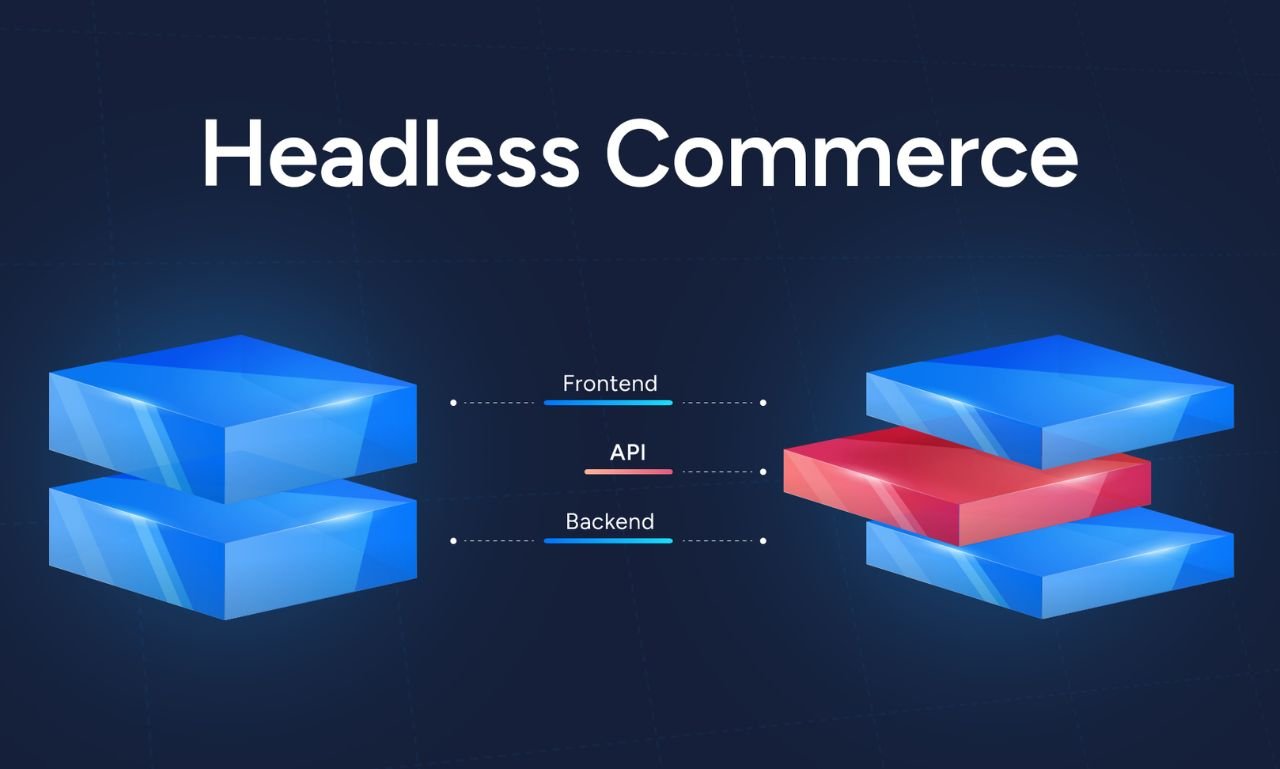
As digital experiences become more fragmented, the Shopify website builder has pivoted toward a “headless” architecture through its Hydrogen framework and Oxygen hosting. Headless commerce decouples the frontend (the head) from the backend commerce engine (the body). This allows developers to build ultra-fast, React-based storefronts that pull data from the Shopify ecommerce platform via the Storefront API.
In late 2026, headless is no longer a luxury for enterprise brands but a standard for any business requiring a 100/100 PageSpeed score. By using Hydrogen, you gain complete creative freedom—meaning your Shopify website design isn’t limited by traditional theme constraints. You can integrate immersive 3D product views and AR “try-on” features directly into the browser without the lag associated with heavy plugins.
Can the Shopify Site Builder Scale for B2B and Wholesale Operations?
The Shopify site builder has traditionally been seen as a D2C (Direct-to-Consumer) tool, but the 2026 updates have transformed it into a powerhouse for B2B. Through Shopify Plus, the Shopify store builder now allows merchants to create dedicated “Company Profiles” with custom price lists, volume-based discounts, and specific payment terms like Net 30 or Net 60.
One of the most significant advancements is the integration of Sidekick, an AI agent that automates B2B onboarding. A merchant can upload a CSV or paste a buyer’s email signature, and the Shopify ecommerce platform will automatically generate a tailored wholesale portal. This transition toward “DTC-like” experiences for bulk buyers ensures that B2B transactions are as seamless and intuitive as buying a single pair of shoes.
How Does Shopify Ensure Data Privacy and Compliance in 2026?
Data security is the cornerstone of the Shopify website builder. In 2026, with 20+ US states and various global regions enacting strict privacy laws (such as the Indiana Consumer Data Protection Act), compliance is more complex than ever. The Shopify site builder handles this by integrating native “Privacy Choices” and consent banners that adapt automatically based on the visitor’s geolocation.
Beyond basic SSL certificates, the Shopify online store creation process includes automatic Level 1 PCI DSS compliance. This means your store meets the highest global standards for credit card security right out of the box. Additionally, the platform’s shift from “Scripts” to “Shopify Functions” in June 2026 provides a more secure, isolated environment for custom logic, ensuring that your site’s code remains performant and protected against data breaches.
Frequently Asked Questions (FAQ)
How much does the Shopify website builder cost in 2026?
Basic plans typically start around $39/month, while Shopify Plus for high-volume merchants starts at $2,300/month. The investment covers hosting, security, and 24/7 support.
Can I switch from WordPress to the Shopify e-commerce platform easily?
Yes, Shopify offers robust CSV import tools and “Store Importer” apps that migrate your product data, customer lists, and order history from WordPress or other CMS platforms.
Do I need to be a designer to build a Shopify website?
No. The “Sections and Blocks” editor allows you to move elements visually. However, hiring a professional for a custom “Shopify website design” can help differentiate your brand from cookie-cutter competitors.
Is Shopify secure for handling credit card payments?
Shopify is certified Level 1 PCI DSS compliant. This means all data and customer information is protected by the same level of security used by major banks.
Does Shopify support dropshipping and print-on-demand?
Absolutely. The Shopify site builder integrates seamlessly with apps like DSers, Printful, and Zendrop, making it the preferred platform for low-inventory business models.
Conclusion
Choosing the right Shopify website builder path—whether through DIY templates or custom development—is the foundation of your digital success. As the landscape shifts toward AI-driven Generative Engine Optimization (GEO), having a platform that is technically sound, fast, and secure is non-negotiable.
For businesses looking to integrate these powerful e-commerce features or those seeking a hybrid approach with WordPress, [wpcarepoint] offers the expertise needed to navigate these complex ecosystems. Whether you are focused on WordPress solutions or scaling a Shopify empire, quality engineering always yields the highest ROI.
Thanks for reading our article.
Developer at WPCarePoint
Booking for a 30-minute Free Consultation on Google Meet: Click here for an appointment today.
contact@wpcarepoint.com
www.wpcarepoint.com